The climax of our sporting history: the immortality reached on 9 December 2018
We recall the most transcendent feat in South American football history. We look at the sporting angles, the sociological context and the incalculable emotional impact of River's win over their eternal rival at the Santiago Bernabéu. The date this site is named after.
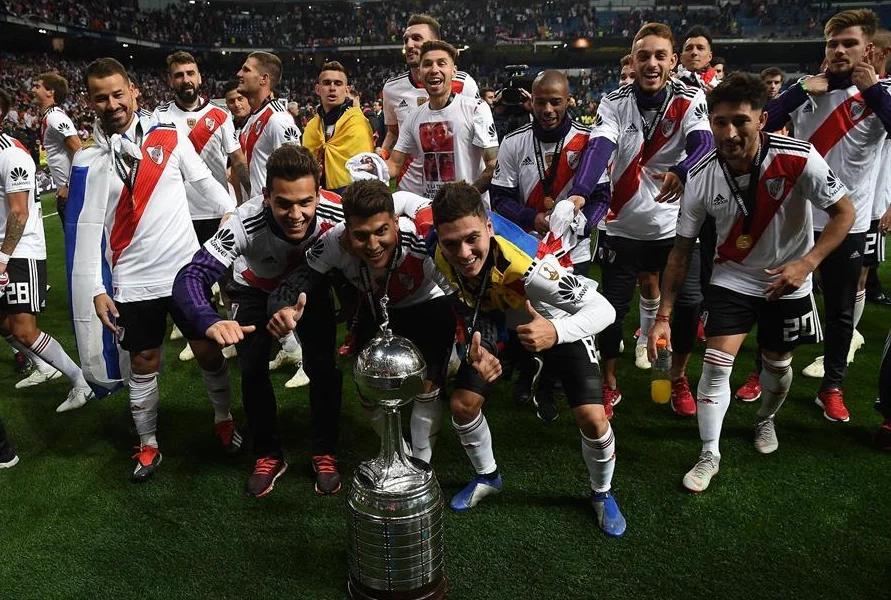
Dear readers: welcome to a new instalment of this space for reflection and analysis. It is only right to begin this editorial with a clarification that, for the regulars of our columns, may seem obvious, yet which holds the fundamental purpose of our work: it is no mere coincidence that this journalistic space calling you together today carries, in its very name, the date of that epic. Naming our blog as a direct tribute to 9 December is, above all, a statement of principles. It is the full acknowledgement that time, for our prestigious institution, was irremediably divided into a “before” and an “after” of that night in the Spanish capital. From this stronghold, which proudly bears the date that made us eternal, we set out to retrace the details of the final that brought the planet to a standstill.
As the pages of the calendar continue their inexorable course, historical perspective allows us to appraise ever more clearly the magnitude of what happened. We invite you to join us in this unhurried, reflective read, to relive the events and consider what it means, in one's innermost being, to carry the banner of this victory.
The prelude to an unprecedented contest
To understand the scale of the outcome in Madrid, we must place ourselves in the context of a month that tested the cardiovascular endurance of an entire country. The 2018 Copa Libertadores final was not a mere sporting event; it rose into a sociological phenomenon of global scale.
After a tactically rich draw at our eternal rival's stadium (2-2), the decider was scheduled to take place at the glorious Estadio Monumental. However, the widely known incidents in the vicinity of the ground forced South American football's governing authorities into an unprecedented decision, moving the continent's most important club final to the Old World. The Estadio Santiago Bernabéu, a stage forged in grandeur and mysticism, was the canvas chosen to host the decider. Far from being intimidated by the exile and the impossibility of settling the tournament before their own supporters, the squad led by Marcelo Gallardo showed commendable psychological resilience, turning organisational adversity into unmatched emotional fuel.
The tactical chess match at the Santiago Bernabéu
The course of the match played that Sunday 9 December demands meticulous analysis. In the first half, the side from La Ribera managed to dictate terms through physicality and defensive organisation, capitalising on an attacking transition that ended with the opening goal moments before the end of the first chapter. At that precise instant, faced with the dismay that might have overwhelmed any other team, the true class of River Plate emerged.
The second half was an exhibition of tactical reading by the coaching staff and superb execution by the athletes. The change of shape, based on the introduction of midfielders with greater creative capacity, allowed our institution to monopolise possession. The string of passes woven near the opposition area flowed, inevitably, into a superlative team move that ended with Lucas Pratto's low finish, restoring a parity that did strict justice to the run of play.
That equaliser was not merely relief on the scoreboard; it was a lethal blow to the opponent's morale. From there, River Plate managed the rhythm of the match with the craft that only the great teams of history possess, penning their opponent back and extending the decider into extra time.
The height of glory: from precision to the eternal run
The extra time played in the Iberian capital is, probably, the most valuable thirty-minute segment in the more than one hundred years of our club's life. With numerical superiority in our favour, the product of the rival midfield's repeated fouls, River Plate's territorial dominance became suffocating.
It is in the 109th minute that destiny decides to crown one of the most exquisite performers ever to wear our shirt. Juan Fernando Quintero's control and subsequent strike obey not the ordinary laws of physics, but the inherent genius of exceptional talents. That shot, which lodged in the top corner, unleashed a level of euphoria that transcended geographical borders.
Yet the epic required a final act. In the death throes of the match, with the opposing team thrown entirely into our area chasing a desperate equaliser — their goalkeeper included — a clearance from our defence set up the move that brings down the curtain on this masterpiece. Gonzalo Martínez's run towards the unguarded goal is, for you and for every supporter, the materialisation of ecstasy. Every metre the midfielder covered was a stifled cry from entire generations; it was the definitive seal on the winning of the fourth Copa Libertadores.
The psychological impact: what does 9 December mean to you?
Having reached this point in the analysis, it is essential to step away from the strict rigour of tactics and statistics to enter a deeper, more sociological reflection. What does it truly mean to hold this triumph in the trophy cabinet of our history?
For the River Plate supporter, 9 December is not a simple anniversary; it is a perpetual state of grace. It means possessing the ultimate argument of authority in our country's sporting debate par excellence. In the folklore of Argentine football, so rooted in passion and rivalry, this triumph represents an unbreakable shield against any future adversity. It is the conclusion that closes every debate: when history demanded the greatest demonstration of greatness on the most imposing stage possible and against the rival of a lifetime, River Plate prevailed beyond question.
For you, dear reader, evoking this date means travelling an escape route towards absolute happiness. In times when the pressures of everyday life bear down, the memory of Madrid works as an invulnerable emotional refuge. It means knowing oneself a participant, even if only through support from thousands of kilometres away, in the greatest achievement a football club can aspire to on the continental stage. It is the spiritual peace of knowing that our children, and our children's children, will grow up under the shelter of a victory that admits no expiry.
The legacy of an unequalled era
Finally, it must be underlined that this title was not a product of chance nor a fortuitous alignment of the stars. It was the climax of an institutional and sporting project led by Marcelo Gallardo. A structure grounded in meticulous work, tactical discipline, respect for the club's aesthetic roots and an insatiable competitive ambition.
9 December 2018 immortalised a generation of footballers who understood perfectly the weight of the shirt they defended. They became contemporary heroes, and their feat will endure in the collective memory for as long as the ball keeps rolling.
For all this, this space bears the name of that day. Because we believe that honouring the prestige of River Plate is a daily task, and there is no brighter lighthouse to guide our journalistic and institutional path than the glory attained in the Spanish capital. We raise a toast, today and always, to the eternity of that triumph, in the certainty that the place we occupy at the summit of football history belongs to us by legitimate right.
Facts & records
Swipe for more- Record
The first-ever River–Boca final
The 2018 edition was the only Copa Libertadores final ever contested between the two clubs in the tournament's entire history.
- Stat
Quintero's goal
It came in the 109th minute, from the edge of the box and with his left foot. It was the goal that turned the tie around.
- Trivia
A final in Europe
It is the only Copa Libertadores final ever played outside South America. It was contested at the Santiago Bernabéu, in Madrid.
- Quote
“It's eternal glory”
The phrase became forever tied to that night and to the way the supporters remember it.
Players mentioned
Topics
Comments
(0)Argue about anything you like, but no abuse. Comments with personal attacks get deleted.
No comments yet. Be the first.